The Davao Guide for BPO Shift Workers and Remote Freelancers (2026)
Davao’s IT-BPM workforce stood at about 85,000 in 2025 (DICT-Davao, June 2026) against an industry target of 150,000 by 2028 set in 2023, and the city’s remote freelancer population has grown alongside it, driven by Converge’s fiber rollout, the Telecommuting Act, RA 11165, and rents that run 30–40% below Metro Manila for comparable units. That gap is the whole pitch. Entry-level BPO pay starts at ₱18,000–22,000/month (early 2026) ; experienced remote freelancers serving foreign clients clear ₱80,000–150,000/month (early 2026) . Both populations face the same three Davao-specific questions: which corridor to live in, what the internet actually delivers at your address, and how much shift-friendly or work-from-home housing actually costs.
This guide is the single page that answers those three questions across both populations, with named employer addresses, building-level rent ranges, ISP plan-by-plan reality, and budget math from ₱20,000 BPO entry pay through ₱150,000 remote consultancy rates. Every section funnels into a deeper spoke article. Use it as the map, then click through for the spoke that matches your situation. Start with the corridor.
Pick Your Reality
The most expensive mistake is treating “BPO worker” and “remote freelancer” as the same problem. They are not. Pick your row below and skip to the section that matches.
- BPO shift worker, entry-level (₱18,000–22,000) → Bedspace or shared apartment in Matina-Ecoland, within walking distance of office. Skip Lanang and Toril.
- BPO shift worker, mid-level (₱25,000–35,000) → Solo bare studio in Matina-Ecoland or older Bajada walk-up. Inverter AC non-negotiable.
- Remote freelancer, earning ₱40,000–80,000 → Furnished studio in Bajada or Ma-a with confirmed Converge fiber. Mobile data backup mandatory.
- Remote freelancer, earning ₱80,000+ → Furnished 1BR in Lanang with PLDT Fibr or Converge 400 Mbps. Two-ISP setup, UPS on the ONT.
- Hybrid (BPO + side gig) → Bajada or Matina near office, prioritise unit with desk space and inverter AC for daytime side-work sessions.
- Arriving from Manila or abroad → Short-stay furnished condo for 30 days while you test fiber, commute, and shift roster.
- Already in Davao, ready to move → Pull a DLPC bill from the prospective unit and a speed test before you sign anything.
Where Davao’s BPO Employers Actually Are
Davao’s BPO and IT-BPM employers cluster in three commercial corridors, and the difference between them is not branding. It is jeepney routes, walking distance, and which barangays absorb the housing demand.
Matina-Ecoland Corridor
The Matina-Ecoland stretch along Quimpo Boulevard is Teleperformance country. Teleperformance runs its first Davao site on the 2nd floor of the SM City Davao Annex and opened a second, PEZA-registered site at The Uprise, Felcris Centrale, 40-D Quimpo Boulevard on 29 January 2026 (TP press release). Open Access BPO runs a 200-seat second Davao site at Matina IT Park (Open Access BPO). The corridor also hosts smaller outsourcing firms in converted commercial buildings around SM City Davao and Matina Town Square. Density is the draw. (Concentrix, which an earlier version of this guide placed here, has no Matina site.)
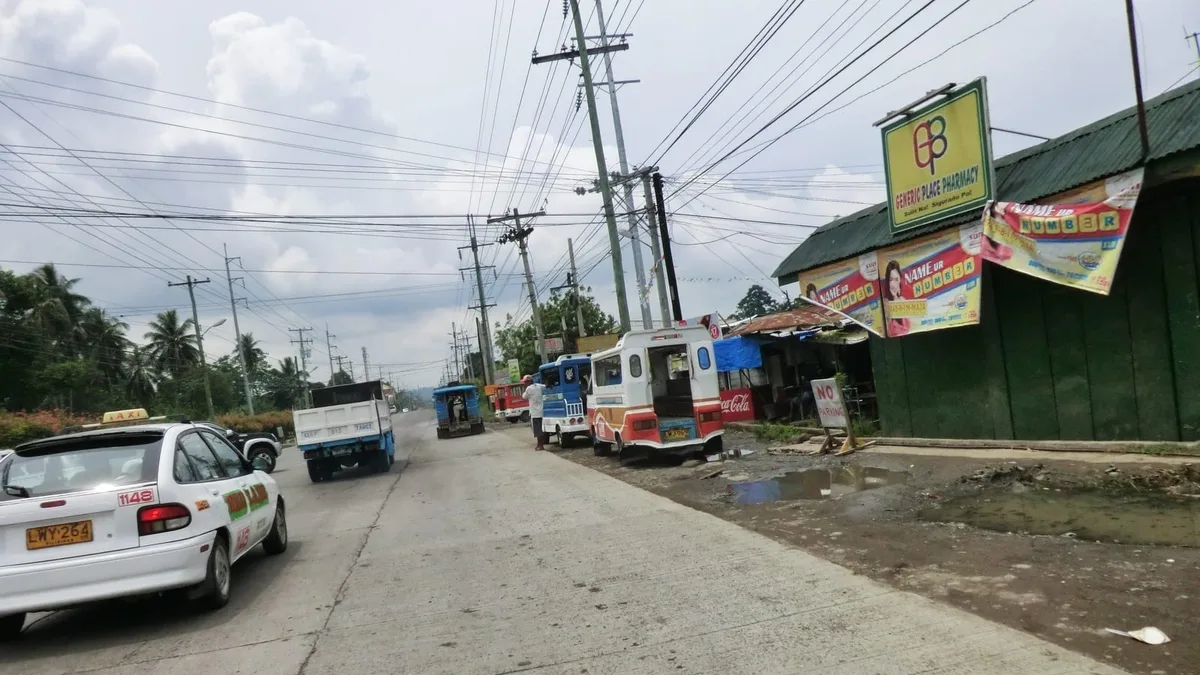
Jeepney routes covering Matina-Ecoland: the Matina-Toril and Matina-Bangkal routes run along Quimpo Boulevard with ₱13 base fare for the first 4 km (a ₱14 fare approved on 17 March 2026 was suspended by the President the next day and remained suspended as of 6 August 2026). The SM City Davao to downtown route via Quimpo connects Matina workers to Bajada in 15–25 minutes off-peak. Rush hour doubles that.
Bajada-Obrero Corridor
Bajada and downtown Poblacion form the historic CBD BPO zone along J.P. Laurel Avenue between Abreeza Mall and Victoria Plaza, running south to Quirino Avenue. Concentrix occupies Abreeza Corporate Center, its second Davao site (SunStar); Sutherland is at Building 2, Filandia IT Center, Jacinto Extension corner Quirino Avenue (Sutherland locations); iQor runs its Davao site at 16 P. Sobrecarey Street in Obrero; and several mid-size BPOs occupy converted commercial buildings along Quirino Avenue and Palma Gil Street. Walkable, and priced for it.
Jeepney routes: the Bajada-Buhangin and Bajada-Sasa routes along J.P. Laurel run frequently from 5 AM to 10 PM at ₱13 base fare. The Bajada-Matina route via Bolton Bridge connects the two BPO corridors in 20–30 minutes off-peak, longer at 5–7 PM rush.
Lanang Corridor
Lanang is the newer corridor, anchored by Damosa IT Park, where Concentrix opened its first Davao site, and by Davao Park District, whose Davao Finance Center houses Concentrix’s third site (opened August 2022 for 1,600 seats) and iQor’s second. The corridor stretches from SM Lanang Premier toward the airport, with newer condo buildings (Avida Towers Davao, Verdon Parc, Camella Northpoint) clustering along the J.P. Laurel-Lanang stretch. The corridor’s competitive advantage is fiber-pre-wired buildings and proximity to international flight access at Francisco Bangoy International Airport.
Jeepney routes: the Lanang-Bajada route via J.P. Laurel runs at ₱13 base fare, takes 10 minutes off-peak and 30–40 minutes at 6 PM. Late-night service thins after 10 PM, which is why Lanang BPO workers on graveyard typically Grab home at ₱100–200 per ride.
Interactive calculator Commute cost vs rent premium calculator Plug your office address, target rent budget, and shift pattern — the tool returns the breakeven point where cheaper rent in Toril stops paying for the late-night Grab rides. Run the mathFor the full breakdown of which corridor matches which employer, see the Davao BPO renting guide — it covers building-by-building options inside each corridor. The Davao Bus Project that will eventually replace these jeepney routes is now targeted for partial operation in the first quarter of 2028 (BusinessWorld). The Davao commute matrix has the door-to-door times between each corridor and the main employment anchors, day and night.
BPO Housing Cost Reality
The first hard number for a BPO worker in Davao is the 30%-of-take-home housing cap. An entry-level agent earning ₱18,000–22,000/month (early 2026) gross has roughly ₱16,500–20,200 net after the employee shares of SSS (5%), PhilHealth (2.5%) and Pag-IBIG (₱200), with no income tax below ₱250,000 a year, meaning a true affordable rent ceiling of ₱4,900–6,050. Night differential adds a statutory 10% of the hourly rate for work between 10 PM and 6 AM under Article 86 of the Labor Code, and 2026 Davao postings commonly offer 15 to 20% (JobLink). The cheapest solo studio in Matina-Ecoland starts at ₱7,000–10,000/month (early 2026) . The math does not work at entry level without sharing. So most share. For scale, the Region XI non-agriculture minimum wage is ₱540/day in force since 1 September 2026, about ₱11,880 a month at 22 working days, so entry-level BPO base pay sits only a few thousand pesos above the legal floor before night differential.
| Category | Range (₱) | Notes |
|---|---|---|
| Rent (bedspace or shared apartment, Matina) | 2,500–6,000 | Share with 1–3 colleagues |
| Electricity share (DLPC) | 800–1,800 | Split AC + fan use |
| Water share (DCWD) | 145–255 | A 15–25 cu.m. household bill of ₱430–760 split three ways |
| Internet share (Converge or PLDT) | 500–850 | Split 2–3 ways |
| Food | 5,000–8,000 | Carinderia + cooking mix |
| Transport (walk + occasional jeepney) | 500–1,500 | |
| Phone load | 300–800 | |
| Misc | 1,000–2,000 | |
| Total | 10,745–21,205 |
Estimates as of Early 2026. Actual costs vary by building, usage, and lifestyle.
Mid-level agents on ₱25,000–32,000/month (early 2026) gross gain the option of solo studios at ₱7,000–10,000/month (early 2026) in older buildings along Quirino Avenue and side streets off Quimpo Boulevard. Condo studios at Verdon Parc or buildings near SM City Davao run ₱10,000–14,000/month (early 2026) with amenities. The full salary-to-rent breakdown by tier, including night differential math and shuttle service notes, is in the BPO housing cost guide.
Interactive calculator What rent fits your BPO pay? Plug your net take-home and shift pattern — the calculator returns a safe rent range plus live matches from Matina, Bajada, and Lanang. Check affordabilityNext steps:
- See full BPO housing math by salary tier → BPO housing cost guide
- Compare bedspace, shared apartment, and solo studio → boarding house and bedspace guide
- Calculate your full monthly budget → ₱20,000 budget living guide
Where BPO Workers Actually Rent and Why
Three areas absorb the bulk of Davao’s BPO housing demand, and the choice between them is driven by which employer pays you, not by general “best neighborhood” rankings. Follow the employer.
Matina-Ecoland is the primary corridor for Teleperformance and Open Access BPO workers. Studios from ₱7,000–12,000/month (early 2026) for bare units. The flood concern is real. Matina Crossing and Matina Pangi sit in the Matina River basin, and ground-floor units in low-lying blocks flood during heavy rain. Upper floors of concrete buildings along Quimpo Boulevard and Ma-a Road are the safer pick.
Bajada-Obrero suits Concentrix Abreeza, Sutherland and iQor workers. Studios run ₱10,000–16,000/month (early 2026) . The trade is higher rent for walking-distance density: Abreeza Mall, Ateneo de Davao University, multiple cafes and carinderias, and the jeepney network reaching every other part of the city.
Lanang is the premium pick for Concentrix Damosa and Davao Finance Center staff who want the newest buildings. Studios start at ₱12,000–18,000/month (early 2026) , with 1BRs at Avida Towers Davao or Verdon Parc running ₱16,000–25,000/month (early 2026) . The corridor has the best fiber infrastructure in the city but the highest rents.
| Matina-Ecoland | Bajada-Obrero | Lanang | |
|---|---|---|---|
| Studio rent | ₱7,000–12,000 | ₱10,000–16,000 | ₱12,000–18,000 |
| Furnished 1BR rent | ₱12,000–17,000 | ₱14,000–20,000 | ₱16,000–25,000 |
| Main employers | Teleperformance (2 sites), Open Access BPO | Concentrix Abreeza, Sutherland, iQor | Concentrix Damosa and DFC, iQor DFC |
| Walk to nearest mall | SM City Davao 5–15 min | Abreeza 5–10 min | SM Lanang Premier 5–10 min |
| Fiber availability | Mixed, confirm by building | Good in main corridors | Best in city |
| Main risk | Matina River flood basin | Street noise, older buildings | Higher rent, less city density |
| Best for | Entry to mid-level BPO | Mid-level BPO, walkable urban remote | Senior BPO, higher-income remote |
For full area profiles with named buildings, flood maps, and current rates: Matina-Ecoland, Bajada-Obrero, Lanang. The deeper “why rent here if you work BPO” analysis with night-shift transport math is in the BPO renting guide.
Internet Plan Reality for Remote Work
For BPO workers, internet matters for personal use and side gigs. For remote workers and freelancers, it is the foundation of income. Both populations need to understand what each plan actually delivers, not what the marketing page advertises.
Converge ICT
Converge ICT is the most popular ISP among remote workers in Davao, driven by the best price-to-speed ratio in the market. Super FiberX plans as read on the provider’s page on 4 September 2026, WiFi 6 modem included:
- Play (200 Mbps): ₱1,349/month — the entry-level remote work plan, sufficient for video calls and standard file work.
- Max (400 Mbps): ₱1,599/month — sweet spot for full-time remote workers running simultaneous video calls and background uploads.
- Prime (800 Mbps) and Ultra (1 Gbps): ₱2,099 and ₱2,599/month — overkill for most, useful for teams sharing one connection or developers running heavy CI/CD locally.
Converge’s strength is central districts: Lanang, Bajada, downtown Poblacion, parts of Talomo, and growing coverage in Ma-a. Real throughput typically runs 70–90% of advertised speed off-peak, dropping to 50–70% during 7–11 PM peak hours. Installation timelines run 5–10 business days in covered areas.
PLDT Fibr
PLDT Home Fiber Unli has the widest geographic footprint in Davao, reaching neighborhoods Converge has not yet wired. Plans as read on 4 September 2026:
- Fiber Unli 1299 (100 Mbps): ₱1,299/month — basic fiber, adequate for most remote work but tight for 4K video or heavy concurrent uploads.
- Fiber Unli 1699 (500 Mbps): ₱1,699/month — the tier most full-time remote workers settle on.
- Fiber Unli 2699 (1 Gbps): ₱2,699/month — premium tier; static IP is an add-on for developers and VPN-dependent setups.
PLDT’s advantage is reach into older neighborhoods, Mintal, parts of Buhangin, and outer Toril where Converge has not yet expanded. Real throughput tracks similarly to Converge in covered areas. Installation timelines stretch to 2–3 weeks in older buildings.
Globe at Home
Globe’s GFiber footprint in Davao is smaller than both Converge and PLDT; GFiber Unli 1699 gives up to 200 Mbps where the network reaches, per reseller listings (globe.com.ph refused our fetch on 4 September 2026, so confirm on the site). Most remote workers select Globe only when neither of the other two reach. The GFiber Prepaid one-year plan, 50 Mbps for ₱6,999, about ₱583 a month, is the cheap backup line; a prepaid pocket WiFi is unreliable as a primary work line, because shared bandwidth and inconsistent throughput make it impractical for sustained video calls.
Smart Bro and Mobile Data Backup
Smart Communications and Globe both sell prepaid mobile data SIMs that double as backup hotspots. The standard remote worker setup pairs primary fiber with a Smart or Globe SIM in a pocket WiFi device — total cost ₱1,950–3,500/month (early 2026) for both connections.
The detailed ISP comparison with coverage maps, real-world speed tests, and provider switching tactics is in the Davao internet provider guide, and the utilities setup guide walks the installation sequence for renters arriving from out of town.
Remote Worker Cost Guide
A remote worker’s Davao budget hinges on three lifestyle decisions: rent tier, AC discipline, and how much you eat out. Here is the math at the two most common income points.
| Category | Range (₱) | Notes |
|---|---|---|
| Rent (furnished studio, Bajada or Matina) | 9,000–13,000 | Bare units 20–30% less |
| Electricity (DLPC) | 2,500–4,500 | Inverter AC, work hours only |
| Water (DCWD) | 290–445 | Solo, ~10–15 cu.m.; the ₱265.05 minimum charge plus meter fee is the floor |
| Internet (Converge Play 1349 + Smart backup) | 1,950–2,350 | |
| Food | 6,000–10,000 | Mix of cooking + carinderia + restaurants |
| Transport (jeepney + occasional Grab) | 1,200–2,500 | |
| Phone, gym, misc | 2,000–4,000 | |
| Total | 22,940–36,795 |
Estimates as of Early 2026. Actual costs vary by building, usage, and lifestyle.
| Category | Range (₱) | Notes |
|---|---|---|
| Rent (furnished 1BR, Lanang or central Bajada) | 16,000–25,000 | |
| Electricity (DLPC) | 4,000–7,000 | AC most work hours |
| Water (DCWD) | 290–445 | Solo, ~10–15 cu.m. |
| Internet (Converge Max 1599 + Smart backup) | 2,200–2,600 | |
| Food (restaurants 3–4x/week) | 10,000–18,000 | |
| Transport (mostly Grab) | 2,500–5,000 | |
| Co-working day passes (4–8x/month) | 1,400–4,000 | |
| Gym + wellness | 1,500–3,000 | |
| Misc, leisure, weekend trips | 3,000–6,000 | |
| Total | 40,890–71,045 |
Estimates as of Early 2026. Actual costs vary by building, usage, and lifestyle.
At ₱40,000, the typical solo remote worker spends ₱23,000–36,800/month (September 2026, table above) all-in. At ₱80,000+, the same worker spends ₱41,000–71,000/month (September 2026, table above) . The gap between income and burn is what makes Davao economically rational for foreign-currency earners. The Davao vs Manila cost comparison shows the same lifestyle costs 40–60% less than the equivalent setup in Makati or BGC.
For income-tier breakdowns by gross salary including BIR 8% vs graduated tax math, see the Davao freelance income tiers guide. For the underlying ISP, AC, and co-working spend by lifestyle tier, the remote worker cost guide goes deeper.
Digital Nomads: Visa and Davao Reality
Foreign digital nomads use the same visa routes as tourists. Executive Order 86 (April 2025) authorises a Philippine Digital Nomad Visa, but the DFA has not opened applications and the e-visa portal does not list it, so it is not a route you can plan around yet. Most nationalities receive 30-day visa-free entry on arrival, then extend at the Bureau of Immigration District Office on the 2nd floor of NCCC-Victoria Plaza along J.P. Laurel Avenue (BI office directory). Extensions stretch the stay to a 36-month ceiling for non-visa-required nationals. The first 29-day extension costs ₱3,030 on BI’s posted schedule, later extensions ₱2,430 to 4,300 each plus the ACR I-Card, so a full year runs roughly ₱18,000 to 28,000 in fees.
The honest Davao-vs-elsewhere picture for nomads: lower cost than Bali or Chiang Mai for equivalent housing quality, comparable internet speeds, but a much smaller coworking and nomad community. Dedicated coworking space is thin and turns over quickly, so treat any listed day-pass price as a phone-call-first figure. Most full-time remote workers in Davao work primarily from their apartment and rotate to Bo’s Coffee at SM Lanang Premier or Blugré Coffee branches for variety.
The Philippines taxes residents on worldwide income — staying more than 180 days in a calendar year creates a legitimate tax-residency argument. The digital nomads and remote workers guide covers visa extension fees, ACR I-Card requirements, SRRV thresholds, and the tax-residency reality in detail.
Shift-Friendly Housing Checklist
What works for a 9-to-5 office worker does not work for a graveyard BPO agent. Since April 2026 ecozone BPOs may also run up to 90% of staff on temporary work-from-home under FIRB Resolution 005-2026, so a shift-friendly unit now also means a desk. The unit features that matter for shift workers, in order:
- 24/7 building security. Lobby guards and CCTV are standard in condos. Boarding houses with unlocked gates at night are a safety risk for 4 AM arrivals. Avida Towers Davao, Verdon Parc, Northpoint, and Abreeza Residences all have 24/7 lobby staff and house significant BPO populations.
- Inverter AC. Daytime sleep through 32–34°C heat requires 6–8 hours of AC runtime. Inverter units cut DLPC bills by ₱1,500–3,000/month (early 2026) versus non-inverter at the same usage, at the current residential rate of ₱12.90/kWh (August 2026) ↗ . Always ask, and check the outdoor compressor for the inverter label.
- Blackout curtains or window tinting. Davao’s morning and afternoon sun is intense. Budget ₱500–1,500 (early 2026) to install your own if the unit lacks them — non-negotiable for daytime sleepers.
- Quiet floor. Request 5th floor or higher in condo buildings. Lower floors hear lobby traffic, jeepney noise, and morning deliveries.
- Fiber internet at the unit. Speed test before signing. A “fiber building” means nothing if your specific unit’s wiring caps throughput.
- Walking distance to office. Within 15 minutes is the rule for night shifts. Beyond that, surge-priced Grab eats the rent savings.
- 24-hour food access. Bajada has 7-Eleven and Ministop branches that run 24/7 along J.P. Laurel. Matina has fewer 24-hour options — confirm what is open near your block before committing.
- UPS-friendly outlets. A ₱3,500–6,000 (early 2026) UPS on the fiber ONT and router covers brief DLPC outages. Verify outlet placement near the network gear during the viewing.
The full unit checklist with what to ask during viewings is in the first apartment checklist. For DLPC bill math and brownout-proofing, see the Davao electricity bill guide for renters. Davao Light has suspended disconnections for unpaid bills through the October 2026 billing; the bill still accrues.
The First 30 Days BPO Renter Playbook
A new hire moving to Davao for a BPO job — or a remote worker arriving to test the city — has a specific sequence that minimises downtime between landing and full functionality.
Days 1–7: Land in a furnished short-stay. Skip the long lease until you know your shift roster, commute, and which corridor matches your employer. Furnished studios on short-term arrangements in Bajada or near SM Lanang run ₱1,200–2,500/night (early 2026) , expensive per night but cheap insurance against locking into the wrong unit. The short-term rentals guide covers the options.
Days 7–14: Visit at least 6 units across two corridors. Walk the commute from each unit to your office at the hour your shift starts and ends. Run a speed test in every unit. Check the DLPC bill from the previous tenant. Look for inverter AC labels.
Days 14–21: Sign with a 6-month break clause if possible. Most Davao landlords default to 12-month leases with 2 months deposit and 1 month advance; the security deposit guide covers the Rent Control Act caps and how to negotiate. For uncertain first-6-month roles, ask about short-term furnished arrangements at a 10–20% premium over annual-lease rates.
Days 21–30: Set up utilities, internet, and your work base. Internet application same day you sign — Converge takes 5–10 business days, PLDT 2–3 weeks. Buy your UPS and Smart backup SIM during the gap. The utilities setup guide walks DLPC, DCWD water, and internet activation in order.
Rental scams remain a real risk — fake Facebook listings collecting ₱1,000–10,000 reservation fees via GCash from someone you have not met in person. The rental scams guide covers the verification steps.
Next steps:
- See the full move-in cost breakdown → first apartment checklist
- Compare BPO-friendly buildings → best condos in Davao
- Understand the city overall → cost of living complete guide
- Pick the best month to lease → best time to rent Davao
Wrapping Up
Davao’s BPO and remote worker populations share three problems: which corridor matches the employer or the lifestyle, which ISP plan actually delivers at the address, and how much shift-friendly housing or work-from-home space costs at each income tier. The corridors are Matina-Ecoland, Bajada-Obrero, and Lanang, and the choice tracks where your employer sits, not which area sounds better in general “best neighborhoods” listicles. The internet decision tracks fiber coverage at your specific building, not the plan tier on the marketing page. The housing math tracks your take-home pay against the 30% cap, with night-shift commute costs folded in for BPO workers and backup internet folded in for remote freelancers.
The spoke articles linked throughout this guide go deeper on each of those decisions. The BPO housing cost guide handles salary-to-rent math by tier. The BPO renting guide breaks down corridor-by-corridor housing reality with named buildings. The remote worker cost guide covers ISP and AC budget math at ₱40K and ₱80K incomes. The digital nomad guide covers visa logistics and the honest comparison with Cebu, Manila, Bali, and Chiang Mai. Pick the spoke that matches where you are, and use this hub as the map back when the next decision comes up.
Frequently Asked Questions
- Where do most BPO workers in Davao live?
- Most BPO agents cluster in three corridors. Matina-Ecoland for Teleperformance, with two Quimpo Boulevard sites (SM City Davao Annex and The Uprise at Felcris Centrale), and Open Access BPO at Matina IT Park, studios ₱7,000–12,000. Bajada-Obrero and downtown for Concentrix at Abreeza Corporate Center, Sutherland at Filandia IT Center on Jacinto Extension and iQor on P. Sobrecarey Street, studios ₱10,000–16,000. Lanang for Concentrix Damosa IT Park and the Davao Finance Center sites of Concentrix and iQor at Davao Park District, studios ₱12,000–18,000.
- Which internet plan should a remote worker in Davao get?
- Converge Super FiberX Play, 200 Mbps at ₱1,349/month, is the price-to-speed sweet spot if fiber reaches your building. PLDT Fiber Unli 1699 (500 Mbps) is the wider-coverage fallback for older buildings and outer barangays. Globe GFiber Unli 1699 is the third option where neither reaches. Confirm fiber at the exact address before signing a lease — building wiring caps real throughput regardless of the plan tier.
- Can a Davao BPO agent on ₱25,000 afford to live alone?
- A mid-level agent on ₱25,000 net take-home can afford a bare studio at ₱7,000–10,000 in Matina-Ecoland or older walk-ups in Bajada. Entry-level agents on ₱18,000–22,000 typically share apartments at ₱3,500–6,000 per share or take bedspaces at ₱2,500–5,500 to keep housing under 30% of income.
- What does a remote worker earning ₱80,000 spend monthly in Davao?
- A solo remote worker on ₱80,000 spends roughly ₱41,000–71,000/month for a furnished 1BR in Lanang or Bajada, fiber internet plus mobile backup, AC during work hours, mixed home cooking and restaurants, Grab transport and a few coworking days. That leaves ₱9,000–39,000 in monthly savings before tax — the gap remote workers reliably bank.
- Do night-shift BPO workers in Davao need to live within walking distance of the office?
- Effectively yes. Jeepneys stop running around 10–11pm in most Davao routes, and Grab surge after midnight runs ₱200–300 per ride. At 22 working days, late-night transport alone hits ₱4,000–6,000/month — usually more than the rent gap between a walking-distance studio and a cheaper Toril or outer barangay unit.