Is Davao City Safe? Neighborhood-Level Safety Data for Renters
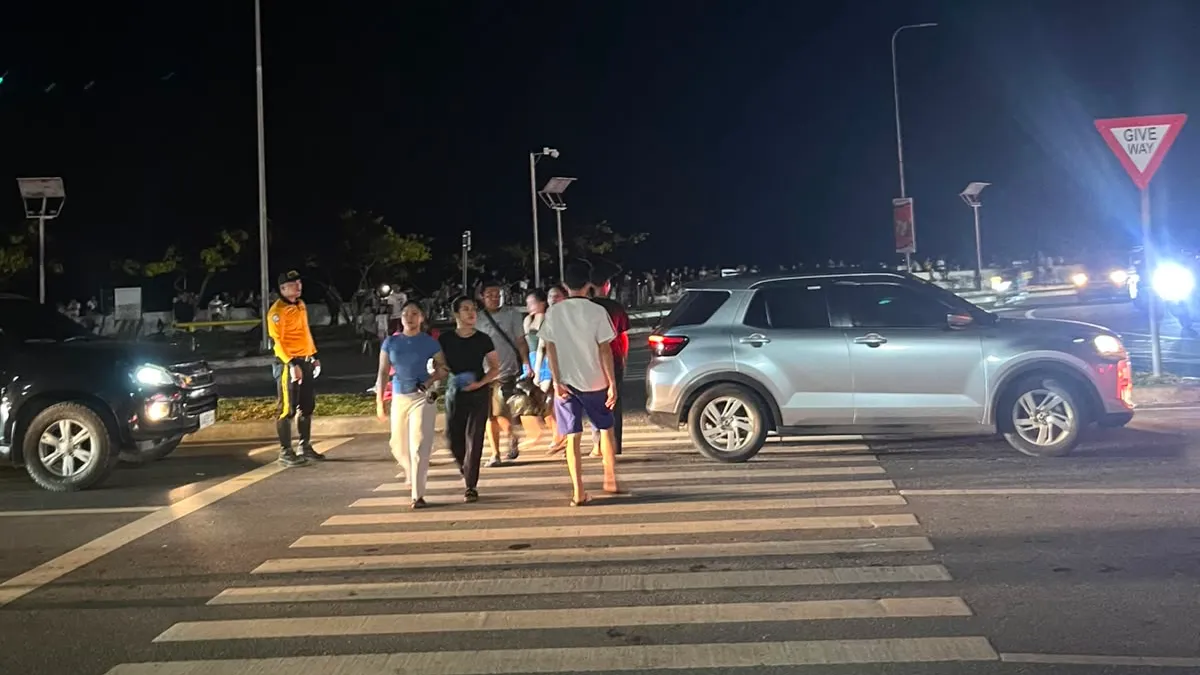
Davao City holds a Numbeo Safety Index of 71.2 (Crime Index 28.8, last updated 18 May 2026, n = 1,044 contributors) — third in Southeast Asia behind Chiang Mai and Singapore, and first among all Philippine cities. Davao City Police Office focus crimes fell 23% in 2025 (674 → 518), and early-2026 PRO-Davao data shows a further 29% drop.
Those numbers matter if you’re deciding where to rent, but city-wide averages only tell part of the story. Safety varies by neighborhood, time of day, and building type. This guide breaks down the data by area so you can pick a neighborhood that matches both your budget and your comfort level. For the full rental decision framework, see the complete renting guide.
How Safe Is Davao Compared to Other Philippine Cities?
Davao ranks first among Philippine cities on the Numbeo Safety Index and second nationally on the World Travel Index, which scored the city at 80.73%. Among Southeast Asian cities, only Chiang Mai and Singapore score higher on Numbeo’s crowd-sourced safety metrics.
The difference between Davao and other major Philippine cities is significant:
| Davao | Makati | Cebu | Quezon City | |
|---|---|---|---|---|
| Numbeo Safety Index | 71.2 | 61.9 | 50.8 | 35.8 |
| Walking alone — day (Numbeo) | 80.8 | 79.1 | 67.5 | — |
| Walking alone, night (Numbeo) | 73.2 | 60.7 | 45.0 | — |
| Crime increasing, last 5 yrs (Numbeo) | 28.5 (Low) | — | — | — |
| Day safety (WTI) | 89.12 | — | — | — |
| Night safety (WTI) | 83.96 | — | — | — |
| Theft-free score (WTI) | 77.13 | — | — | — |
| Violence-free score (WTI) | 80.89 | — | — | — |
The practical takeaway: Davao consistently outperforms Manila, Cebu, and Quezon City across every safety metric tracked by international indices. For renters relocating from Metro Manila, the difference is immediately noticeable, particularly the ability to walk commercial areas after dark without the same level of alertness required in Makati or BGC. Safety is only one factor in the bigger decision — why renters choose Davao over Cebu weighs it against disaster exposure, commute, and pace of life.
The official police numbers track the same downward trend the indices show. Focus crimes are the eight index offences: murder, homicide, physical injury, rape, robbery, theft, and carnapping.
| Source / period | Focus crimes | Prior-year base | Change |
|---|---|---|---|
| DCPO — Jan to mid-Dec 2025 | 518 | 674 (2024) | −23% |
| — of which theft | 211 | 293 (2024) | −28% |
| PRO-Davao — first 2 months 2026 | 204 | 289 (2025) | −29% |
Full reporting: the DCPO 23% drop figure and the PRO-Davao early-2026 decline.
Safety by Time of Day
Davao scores 89.12 for daytime safety and 83.96 for nighttime safety on the World Travel Index, an unusually small gap. In most Philippine cities, night safety scores drop 15-25 points below daytime. Davao’s 5-point gap reflects the city’s 24-hour CCTV coverage and active nighttime patrols.
During the day (6am–6pm), nearly every area in Davao feels safe for walking, commuting, and errands. Commercial districts. Bajada along Quirino Avenue, Lanang along JP Laurel, Ecoland around SM City Davao, have steady foot traffic, security guards at every mall entrance, and visible police presence at major intersections.
After dark (6pm–10pm), the main commercial strips remain well-lit and active. SM Lanang Premier, Abreeza Mall, and SM City Davao keep late hours (most close at 9pm or 10pm), and the surrounding blocks stay busy with foot traffic. Restaurants and convenience stores along JP Laurel Avenue and Quimpo Boulevard keep areas populated.
Late night (10pm–5am) is when awareness matters more. Main roads stay lit and are regularly patrolled. Side streets in residential barangays get dark quickly. Davao doesn’t have Manila’s density of 24-hour establishments keeping every block lit. BPO workers walking to or from night shifts along the Matina IT corridor and Damosa IT Park report feeling safe on the main roads, though most take Grab or company shuttles rather than walk.
Safety by Neighborhood
Not every part of Davao carries the same safety profile. Here’s how the main rental districts compare based on infrastructure, building security, and reported incident patterns. Safety is one column of the decision; the best areas to stay in Davao sets it beside rent, commute time, and flood exposure so you can see which district trades what.
Lanang rates as Davao’s safest rental district. The concentration of controlled-access condos (Avida Towers, Abreeza Residences, 202 Peaklane), the presence of SM Lanang Premier, and Damosa IT Park’s private security create overlapping layers of surveillance. Most buildings have 24-hour guards, CCTV, and key-card access. The area around JP Laurel Avenue stays well-lit until late. Street crime is rare. For the full area profile, see the Lanang neighborhood guide.
Bajada-Obrero is the city’s commercial core, centered on Abreeza Mall and the stretch along Quirino Avenue. High foot traffic, dense commercial activity, and multiple bank and government offices keep the area populated and patrolled during business hours. After 9pm, the commercial blocks thin out but main roads stay lit. Most condos have standard security, guards, CCTV, visitor logs. See the Bajada-Obrero guide for specifics.
Matina-Ecoland is a mixed bag. The Ecoland side (around SM City Davao) has better lighting, newer buildings, and active commercial traffic. The Matina side — particularly areas near the Matina River, is more residential, dimmer at night, and carries both flood and petty crime risk in specific blocks. BPO workers along the Matina IT corridor commute safely on main roads, but side streets south of Quimpo Boulevard are worth avoiding on foot after 10pm. The Matina-Ecoland guide has block-level detail.
Buhangin is a developing district north of Bajada with newer subdivisions, wider roads, and lower density. Camella Homes Davao and similar gated communities provide their own security. The catch: fewer commercial establishments means dimmer side streets, but the gated compound model offsets this with controlled access.
Toril sits further south — more suburban, more affordable, and quieter. Safety incidents are rare, but infrastructure is thinner. Street lighting drops off quickly outside the main Toril commercial strip along the national highway. Renters here tend to rely on private vehicle transport after dark.
Areas to Be Cautious
Two specific areas in Davao come up repeatedly in local safety advice, not as dangerous zones, but as places where awareness matters after dark.
Bankerohan around the public market is one of Davao’s oldest and most congested commercial areas. During the day, it’s a busy produce and goods market — the best prices on fruit and vegetables in the city.
After dark, the narrow streets around the market empty out, lighting is poor, and petty theft incidents are more common than in commercial districts. The area along the Davao River is particularly isolated at night. If you rent nearby, stick to main roads after 9pm and avoid walking alone through the market area.
Roxas Boulevard (Boulevard) along the Davao Gulf waterfront is a popular evening hangout — food stalls, live music, and seaside bars. The lively sections are fine.
But the stretches between establishments, particularly the poorly lit sections near the fish port and toward R. Castillo Street, draw more caution from locals after midnight. The area isn’t dangerous in the way parts of Manila are, but it’s where Davao’s relatively rare incidents of mugging and harassment tend to cluster. Grab or taxi is the safer option for leaving late.
Both areas are perfectly fine during the day. The caution is specifically about late-night foot traffic in dimly lit sections.
Davao’s Safety Infrastructure
Davao’s safety reputation isn’t just perception — it’s backed by systems that most Philippine cities don’t have at the same scale.
CCTV coverage across the city includes approximately 200 government-operated cameras in public areas, with fiber optic cabling being expanded along the coastal area and major roads. In late 2025, the City Council approved an AI-powered CCTV ordinance to add 150 facial recognition cameras at city borders, government buildings, and major parks, budgeted at PHP 14 million.
Condo and building security adds another layer. Most mid-rise and high-rise condos in Lanang, Bajada, and Ecoland operate with 24-hour security guards, CCTV at entrances and parking, visitor logging, and key-card or biometric access. Controlled-access buildings like Avida Towers Davao, Abreeza Residences, and Suntrust Asmara restrict entry to residents and pre-registered visitors. This is standard, not a premium feature, for buildings built after 2010.
Barangay tanods (community watchmen) patrol residential areas, particularly in Buhangin, Toril, and outer barangays where police presence is thinner. Their effectiveness varies by barangay, but they provide a visible deterrent and a local point of contact for minor incidents.
For renters coming from cities without centralized emergency dispatch, the 911 system alone changes the safety equation. If you’re moving from Manila — where emergency response coordination is fragmented across multiple agencies. Davao’s single-number dispatch is a meaningful upgrade.
The moving from Manila guide covers other practical differences.
What the Safest Building Tier Costs
The single biggest safety lever a renter controls is building type, not neighborhood. A controlled-access condo in Lanang or Ecoland and a walk-up apartment two streets over can sit in the same barangay with very different risk profiles. The question is what that security layer costs.
Interactive tool Rank districts with safety as one of your priorities Set your budget, unit type, and commute destination, then weight what matters. The matcher returns Davao neighbourhoods ranked against your answers with the live rent band for each. Open the matcherHere is how the building tiers line up against the Davao Living Cost Index (n = 281 listings, April 2026):
| Building tier | Typical security | Median rent | Band (p25–p75) |
|---|---|---|---|
| Controlled-access condo, 1BR | 24/7 guard, CCTV, key-card, visitor log | ₱25,000 | ₱23,000–₱35,000 |
| Controlled-access condo, 2BR | Same, plus parking control | ₱28,000 | ₱24,000–₱40,000 |
| Gated subdivision house, 2BR | Compound gate + roving tanod | ₱25,000 | ₱20,000–₱30,000 |
| Walk-up apartment / open lot | Locks only; varies by landlord | below the condo floor (₱17,500) | — |
For a one-bedroom, the controlled-access security tier runs ₱ 23,000–35,000/mo (Davao Living Cost Index, Apr 2026) at the typical band — roughly ₱5,000–₱10,000/month above an unsecured walk-up of similar size. That premium buys a guard, CCTV, a visitor log, and access control, which is the same stack the neighborhood safety scorecard weights when it scores each district’s safety column.
The practical read: if budget is tight, prioritising a controlled-access building in a mid-tier barangay generally beats a cheaper unit in the “safest” barangay. The building is the layer you can verify on a viewing; the barangay average is not.
Seasonal Safety Patterns
Safety conditions shift slightly by season in Davao.
Kadayawan Festival (third week of August) brings increased foot traffic, crowded public spaces, and more street vendors, which also means more opportunity for pickpocketing in dense areas like Roxas Night Market and along San Pedro Street. The festival itself is well-policed, but keep valuables close in crowds.
Rainy season (June-November) introduces environmental safety risks. Flash flooding in the Matina River basin and near Bankerohan can trap vehicles and pedestrians. Ground-floor renters in flood zones face both property damage and limited evacuation routes during heavy rains. The Central 911 system handles flood rescue, but prevention, choosing a unit above flood level, is the better strategy.
Holiday season (December-January) sees a slight uptick in petty theft and break-ins, consistent with national patterns. Condo security systems mitigate this, but renters in walk-up apartments should ensure locks and windows are secure. The city’s firecracker ban (enforced year-round, not just at New Year) eliminates one common source of holiday injuries.
BPO night-shift timing is relevant year-round. Workers commuting between 10 PM and 6 AM report feeling safe on main roads, but company-provided shuttle services and Grab rides are the standard practice rather than walking or waiting for jeepneys, which thin out after 9 PM on most routes.
Davao’s safety data holds up across international indices, local crime statistics, and the practical experience of walking its streets. The city isn’t crime-free, no city is, but the combination of declining crime rates, a functional emergency response system, expanding CCTV coverage, and controlled-access building standards puts it ahead of comparable Philippine cities by a wide margin.
Your choice of neighborhood and building type matters more than the city-wide average. A controlled-access condo in Lanang or Ecoland offers a different safety profile than a ground-floor apartment on a dim side street in Bankerohan. Pick the building security level that matches your comfort, verify the neighborhood after dark before signing, and save 911 in your contacts.
For help finding the right neighborhood, the expat renting guide and rental scams guide cover related ground. The flood risk map is worth reading alongside this, safety includes environmental risk too.
Physical safety and disaster readiness are different problems. Davao sits outside the main typhoon belt but is not exempt, and it straddles active fault segments, so the typhoon and earthquake prep guide for renters covers what a tenant can actually control: unit selection, a go-bag, and what the lease says about damage.
Further reading on the data: the Davao Neighborhood Scorecard scores each district’s safety, flood, and commute columns, and the Davao Living Cost Index tracks the rent bands behind the building-tier table above.
Frequently Asked Questions
- How safe is Davao City compared to other Philippine cities?
- Davao City ranks as the safest city in the Philippines on the Numbeo Safety Index with a score of 71.2 (Crime Index 28.8, n = 1,044 contributors, May 2026), ahead of Makati (61.9), Cebu (50.8), and Quezon City (35.8). The World Travel Index also ranks it second nationally with an 80.73% safety score.
- Is Davao City safe at night?
- Davao scores 83.96 for night safety on the World Travel Index — higher than most Philippine cities. Well-lit commercial areas like Lanang, Bajada, and Ecoland feel safe after dark. Bankerohan and parts of Roxas Boulevard are best avoided late at night.
- What is Davao's Central 911 system?
- Central 911 is Davao City's free 24/7 emergency hotline, operational since 2002. It dispatches medical, fire, rescue, and police responders from the main station and seven satellite substations across the city. Medical response averages three minutes, police response about five minutes.
- Which Davao neighborhoods are safest for renters?
- Lanang, Bajada-Obrero, and Ecoland are among the safest for renters — all have controlled-access condos, CCTV coverage, and proximity to commercial areas. Buhangin's newer subdivisions also rate well for security. Upper-floor condos anywhere in Davao add an extra layer of access control.
- Are there areas in Davao City to avoid?
- Bankerohan near the public market and Roxas Boulevard along the waterfront are the two areas most commonly cited for caution after dark. Both are fine during the day. Avoid poorly lit side streets in any district late at night, and stick to main roads if walking after 10pm.